Showing posts with label Chromosomal disorders. Show all posts

A range of rarer Chromosomal disorders copy number variants (CNVs) have been associated with schizophrenia, and both GWAS and CNV studies have provided molecular evidence of genetic overlap between schizophrenia and other disorders. There is increasing interest in phenotypes beyond diagnosis, including further clinical variables and endophenotypes. Next-generation sequencing studies are beginning, with the potential for fast, inexpensive sequencing of the whole genome in large samples, and there is an increasing focus on the functional effects of the candidate risk variants that are being identified.
For a complete list, click on Bentham Science Publishers’ Journals Impacting Science
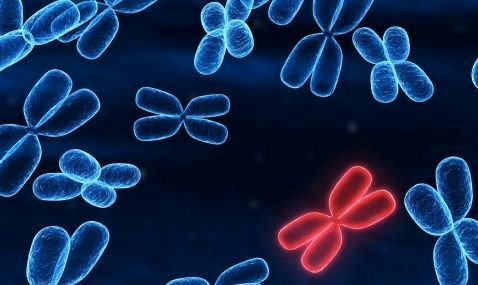
Indeed, a particular subtype of balanced rearrangement – inversions – was recently found to be far more common than had been predicted from traditional cytogenetics. Chromosomal disorders inversions alter the orientation of a specific genomic sequence and, unless involving breaks in coding or regulatory regions (and, disregarding complex trans effects, in their close vicinity), appear to be phenotypically silent. Such a surprising finding, which is difficult to reconcile with the classical interpretation of inversions as a mechanism causing subfertility (and ultimately reproductive isolation), motivated a new series of theoretical and empirical studies dedicated to understand their role in human genome evolution and to explore their possible association to complex genetic disorders. With this review, we attempt to describe the latest methodological improvements to inversions detection at a genome wide level, while exploring some of the possible implications of inversion rearrangements on the evolution of the human genome.
For a complete list, click on Bentham Science Publishers’ Journals Impacting Science

A chromosomal disorder is well defined as the mislaid, subsidiary,
or non-uniform portion of chromosomal DNA. It can be
from an atypical number of chromosomes or a structural abnormality in more than
one chromosome. Chromosome mutation was earlier used in a strict sense to
mean a change in a chromosomal segment, taking into account more than one gene.
A karyotype refers to a complete set of
chromosomes from an individual that can be contrasted to a normal karyotype for
the species through genetic testing. A chromosome abnormality may be diagnosed or confirmed in
this manner.Chromosome divergence usually takes place when there is an error in cell division.
There are various types of Chromosomal disorders. They can be organized into
two basic divisions, numerical and structural. The majority of chromosome
abnormalities transpires as an accident in the egg or sperm, and therefore the
anomaly is adjacent in every cell of the body
Some inconsistency, however,
can occur after conception, resulting in a
disease where few cells contain the rarity and some do not. Chromosome
anomalies mostly are inherited from a parent. This is the reason why chromosome
studies and researches are often performed on parents when a child is found to
have an operation. If in case the parents do not possess that abnormality and
it is proven that it was not initially inherited so, however it may be
transmitted to subsequent generations than.
For a complete list, click on Bentham Science Publishers’ Journals Impacting Science